Showing posts with label painting. Show all posts

Barcelona Beards of 1900


If there was any doubt as to the preternatural talent of the young Picasso, these charming portraits of the artist's Barcelona bar mates show a keen eye and a sharp, easy wit. At eighteen, Pablo captures each subject's unique character.

Marion Peck paints a bearded bloke.


“Jeremiah”
2010
8" x 6" image
15" x 12" framed
oil w/ encaustic on panel

Our friend Marion Peck has mounted another stellar solo show at Sloan Fine Art in NYC. A Victorian sensibility dominates (including black velvet walls!) with oddball portraits, a larger narrative painting and a haunting sculptural installation. http://www.sloanfineart.com/


Degas' Dapper Dandies


Unlike the younger generation of Impressionist artists who ventured outdoors with the newly invented tube oil paint to capture the natural world, Edgar Degas focused almost exclusively on contemporary figures  found indoors. While most famous for his depictions of ballerinas, washerwomen and prostitutes, Degas' sharp powers of observation were well suited to capturing the confident swagger of male sophisticates in Paris.

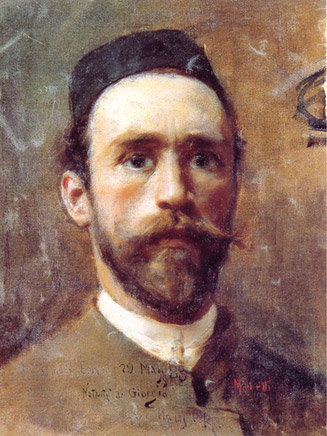
Francesco Paolo Michetti, 1851-1929


Michetti was amongst a small group of artists who brought a luminous light and progressive painterly approach to his Neopolitan paintings. After a lukewarm reception to his work during 1900's World Exposition, he gave up his studio and became a recluse. These self portraits have a bravura that belies any insecurities Michetti might have had.


Domenico Morelli (1823–1901)


With a sensual eye, and dramatic inclination, Neapolitan painter Domenico Morelli found success depicting biblical, oriental, and contemporary subjects.

Mucksnipe!

Mucksnipe!: "Aaron Smith - Fine Art Painter"

Giacomo Balla, 1871-1958.

Italian futurist painter Balla conveys a piercing exploration of man as matter. His self portrait seems both intimate and metaphysical.

A Fine Profile

Painter Robert Gordon Hardie by William Turner Dannat

Emile Friant (1863-1932

The french painter Emile Friant (seen looking up from his easel) abandoned the academic style and atelier methods of his precocious youth, moved to Nancy, and began painting scenes of rural life by daylight. With a luminous touch and astounding attention to detail, Friant documented his artistic circle.

French Painter Charles Maurin (1856-1914)

Self Portrait
Portrait of Georges Seurat

 
Portrait of Henri de Toulouse-Lautrec (etching)


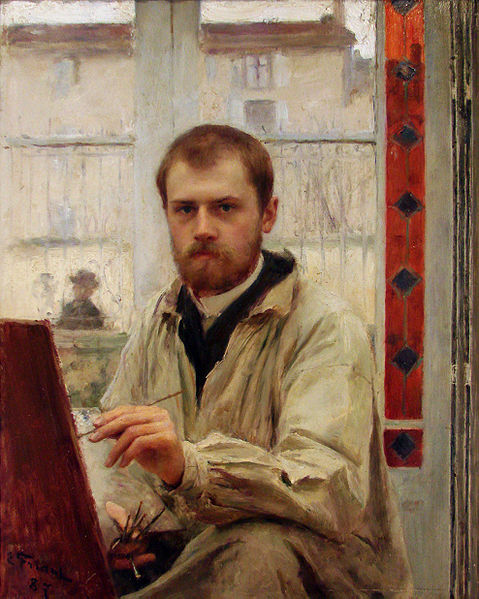
Émile Henri Bernard (1868 – 1941)


With friends like Paul Gaugin ,and Vincent Van Gogh, it's understandable why Emile Bernard is relatively overshadowed in Art History. Although he painted alongside his friends at Pont-Aven, producing similarly revolutionary artwork, he didn't have the dominant personalty of Gauguin, or the dramatic biography of the others to capture as much of the spotlight.  Still, he was perhaps the most articulate of the group, and outlived them by decades.


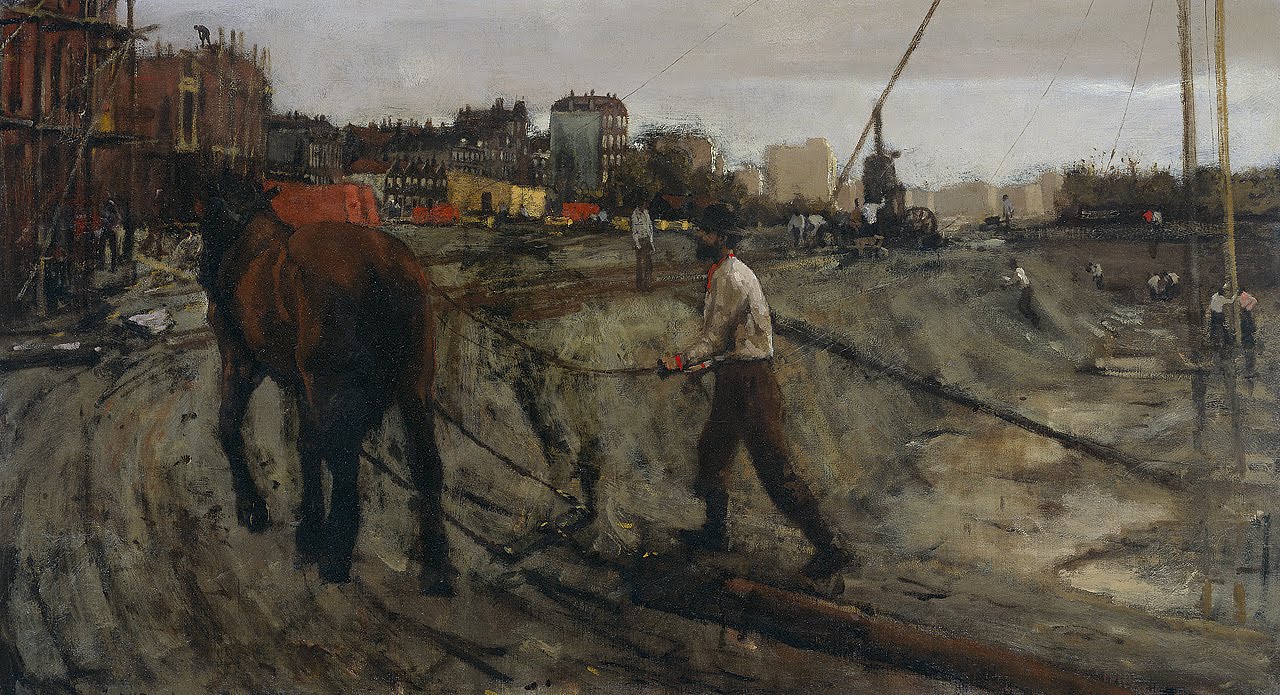
George Hendrik Breitner (1857-1923)

George Hendrik Breitner was a dutch realist painter who, along with his friend Van Gogh, sought out working-class models in the poorer areas of the Hague. Unlike Vincent, who would soon use vivid, emotionally charged colors, George Breitner continued to use earthy hues to reflect the simple life he depicted. His self portraits reflect his serious point of view.

Claude Terrasse (1867-1923)


The brother-in-law of the painter Pierre Bonnard, Claude Terrasse became famous in Paris as a composer of operettas. After being introduced by Bonnard to the avante-garde art and literature scenes, Terrasse's distinctive appearance was immortalized in a portrait by Louis Sue (top). If Auguste Renoir depicts Terrasse within the painter's preference for romantic idealism, Bonnard typically chooses to emphasize the picturesque possibilities of the composer's figure surrounded by the clutter of domesticity.

Manet by Fantin-Latour


Henri Fantin-Latour (1836-1904) was most famous for naturalistic still-life of flowers and fruit as well as slightly mysterious portraits of his fellow artists. One of his most famous friends and sitters was the elegantly dressed Edouard Manet of 1867. Although he made some of the most controversial and progressive art of his time, Manet's outward appearance was that of a well-off sophisticate. Fantin-Latour manages to capture his handsome look, while hinting at Manet's considerable fortitude.

Pupil's masterful portrait of his teacher


John Singer Sargent's portrait of his teacher Carolus-Duran shows his master's charismatic persona as well the student's supreme confidence.

Duran's approach to character


Carolus Duran (1837-1917) established one of the most esteemed ateliers in Paris. He counted Manet, Fantin-Latour, and Courbet as his friends and models, while Maximilien Luce, Takeji Fujishima, and John Singer Sargent were his most famous students. Duran's talent as a portraitist was to adapt his approach to capture the unique physical and emotional presence of the sitter. His male portraits, especially compared to his female ones have a powerfully direct approach. If Sargent celebrated his subject's grandeur and beauty, Carolus-Duran presented his subjects power and presence.